
How to Test That Your MMS is Good
When activating MMS, it is very important that the drops of MMS and activator acid (note: HCl 4% [hydrochloric acid] or citric acid 50% is most commonly used as activator acid) turn amber color within the first 30 seconds. When we say amber, we are referring to a brown color. This can be anywhere from light to dark brown, not really pale yellow. The amber color of MMS activated drops before adding water, is much like the color of a glass amber bottle (such as is used for essential oils, various medicinal potions, or for beer bottles), when held up to the light.
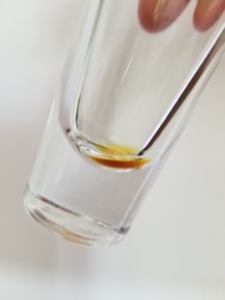 Mix up a 3-drop dose of MMS1 to do this test, if you use less drops it will be difficult to adequately judge the color. It is best to carry out this test in a room with good lighting. When you have mixed your drops (before adding water), hold the glass up against a white or light colored background and look through the side and bottom of the glass (where your drops are) with the glass level with your eyes; at this angle you will be looking through your drop mixture. If you look down into the glass, the drops will often look lighter yellow, but if you view the drops at eye level (with good lighting) you should see a darker shade—that is, amber. Although it turns dark, it must also be transparent (see-through). The drops must appear amber in color. The amber color will fade and become light yellow in about 15 minutes. Do not let the solution sit for more than a minute before consuming it, as it will lose potency.
The amber color is an important indicator that the drop mixture is correct. You are mixing two clear liquids, MMS and an activator. If the liquids are mixed according to instructions they will change color and turn to amber. This amber color indicates that you have the correct liquids and a correct mixture. Very few two clear liquids can produce this same color.
If your drops do not turn amber within the first 30 seconds of mixing, something is wrong with your MMS and/or with your acid, and this mixture may not bring the desired results. You might try mixing up a dose one more time, to be sure you did it correctly, but if you still get very light yellow and not amber color, you can use those drops for the time being, while you try to get some good MMS and acid activator. But I would suggest you do not use this solution (light yellow, not amber, drops) for more than a week or so. If the solution does not at least turn yellow do not use it at all.
Various factors can weigh in as to the color of the drops, such as the type of glass you are using, making sure the glass is completely dry to start, the number of drops you are mixing, the background color of the wall, the time of day and how much natural light is in the room and so on. If you are not getting the right color, and you are sure you have followed the directions correctly, try mixing up the drops a few times in different conditions. For example, use a different glass (some glass qualities distort) make sure the glass is clean enough—no dish soap deposits. Hold your drops up against a white wall, a white fridge, or a light background when testing the color. If in doubt of the color, mix up a 6-drop dose when testing. Test your drops under various conditions, before determining your drops are insufficient.
Note: If you are using an alternative acid such as lemon, lime, or vinegar at a 1-to-5 drop ratio with MMS, your drops will not turn amber in color. In this case, if you want to test that the MMS is good, mix up a 3-drop dose of MMS1 (this would be 3 drops of MMS and 15 drops of lemon, lime or vinegar) and wait three minutes. Then add 1/2 cup (4 ounces/120 ml) of water and test the ppm, which should be 25 ppm.